

Here's the problem with setting a charge out rate and forgetting about it: your costs don't stay the same. Fuel goes up. Insurance renewals hit. You hire an apprentice. A job runs over and you don't bill the extra hours. Slowly, that rate stops covering what it's supposed to - and you don't notice until your accountant talks your ear off at tax time.
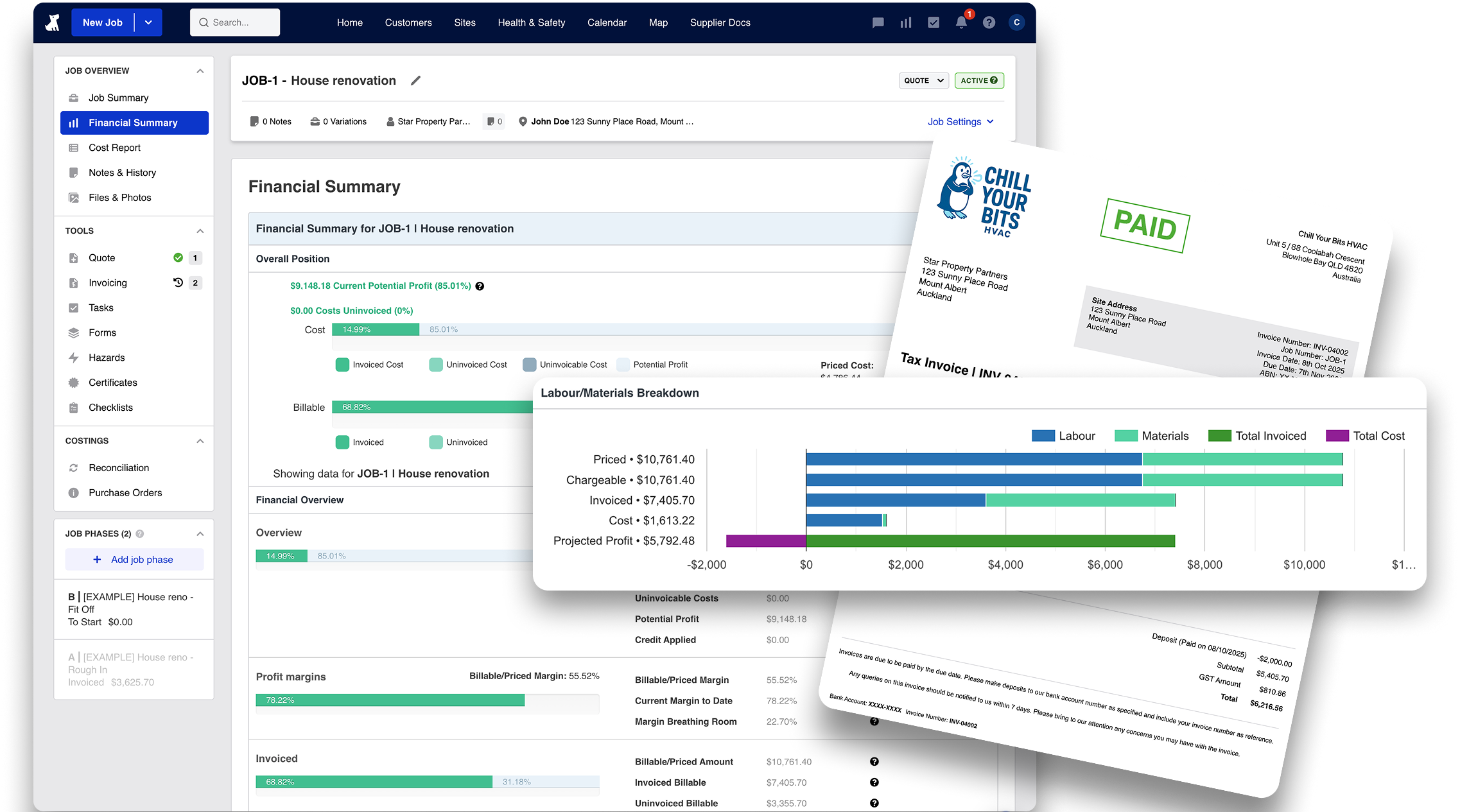
Fergus keeps your charge out rate connected to your real costs, across every job, every day. How? Live job costing against your rate, easy timesheet capture, supplier invoices matched to jobs and margin reporting that tells the truth.
A charge out rate is the hourly rate a tradesperson charges their customers for labour. It needs to cover your wages, business overheads (vehicle, insurance, tools, admin), and your target profit margin. It's different from your wage - your charge out rate includes the full cost of running your business on top of what you take home
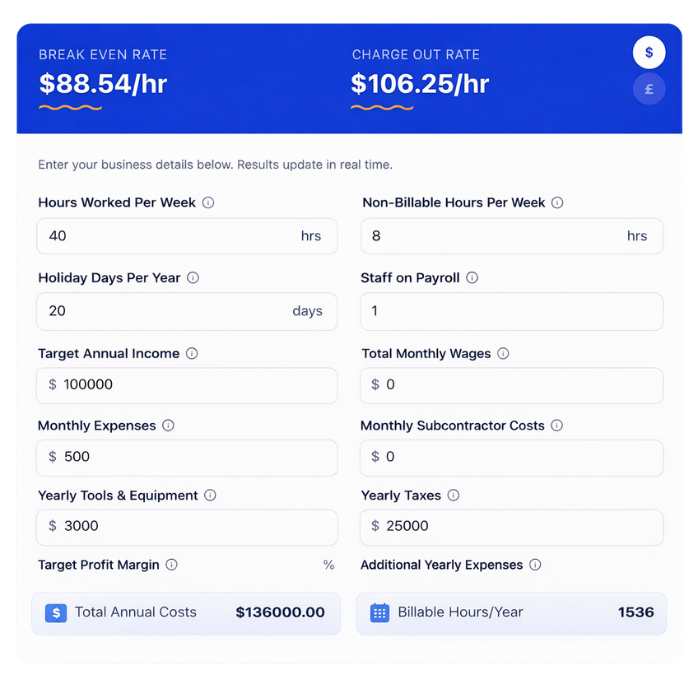
Add up your annual costs (desired salary + all business overheads), divide by your total billable hours per year, then add your target profit margin. For example: $80,000 in costs ÷ 1,380 billable hours = $57.97/hr cost. Add a 25% margin and your charge out rate is $77.29/hr (ex GST). Use the free calculator above to work out yours.
Most tradies can realistically bill 25–32 hours per week. The rest goes to quoting, travel, admin, and callbacks. A common mistake is calculating your rate based on a 40-hour week - that means you're undercharging from day one. Be honest about your billable hours to get an accurate rate.
Some tradies charge a higher rate for specialist or after-hours work and a standard rate for general jobs. The calculator gives you a baseline - the minimum you need to charge across all work. If some jobs are more complex or higher risk, charging a premium on top is common practice.
Usually because overheads are higher than you think. Most tradies underestimate the cost of insurance, vehicle running costs, tool replacements, and admin time. The calculator forces you to account for all of it - which is why the output often surprises people. This is a good thing: it means you've been undercharging.
At least every 6–12 months, or whenever your costs change significantly (new vehicle, insurance renewal, hiring staff). Better yet, use Fergus to track costs in real time - so you know the moment your rate stops covering your overheads instead of discovering it at the end of the year.
Your charge out rate is what you charge per hour for labour. Markup is the percentage you add on top of materials or subcontractor costs. They work together - your charge out rate covers labour and overheads, while markup on materials ensures you're not out of pocket on supplies. Both need to be set correctly for a job to be profitable.
The calculator gives you a static number based on your estimates today. Fergus tracks your real costs - every hour, every invoice, every overhead - and shows you in real time whether your charge out rate is actually delivering the profit margin you planned for. It's the difference between setting a rate and knowing it works.
The free charge out rate calculator above gives you the number. But a number on a screen doesn't track your hours, capture your supplier invoices, or warn you when a job is going over budget.
Fergus does all of that. Every billable hour logged. Every supplier invoice read and matched to the right job. Every overhead tracked. So the charge out rate you calculated actually delivers the profit margin you planned for - on every single job.
Start a free trial. No credit card required.